


On Monday, New York Times columnist Nicholas Kristof wrote an article alleging that sexual abuse of Palestinian prisoners in Israeli jails is widespread. The claims are extremely serious — so serious, in fact, that it makes me wish that it was possible for our society to talk about Israel/Palestine without our brains melting down and dribbling out of our ears in a trickle of neon pink goo.
Personally, I find the general narrative sadly plausible. Prisoner abuse happens everywhere, societies in violent conflicts often see their moral standards erode, and my own country engaged in a prisoner abuse scandal in the aftermath of a horrific attack. Of course, I have no real way to assess the veracity of the claims in the article — I am, after all, just some dickweed with a laptop. The New York Times, however, is a 175 year-old newspaper that basically won the Squid Game-style deathmatch that American publications have been forced to endure. They do have resources to vet, fact-check, and otherwise verify the news stories that fill the dead space in between their lucrative puzzle games.
But the presence of one claim in Kristof’s article, in particular, suggests that the Times vetting process may need a serious reboot. Here is a story that Kristof relays from an anonymous source:
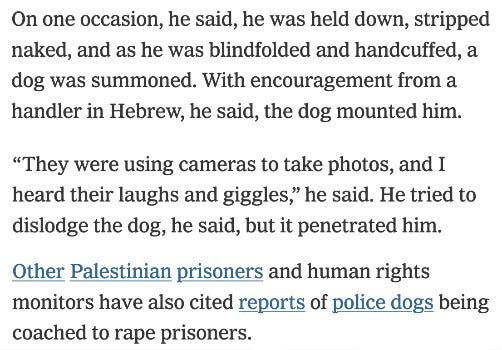
That is a remarkable claim; I’m tempted to call it “an unbelievable claim”. And though I won’t dismiss it out-of-hand, I will say that if that claim doesn’t ping your bullshit detector even a little, then your bullshit detector is not merely broken: Your bullshit detector has gained sentience and is plotting to destroy you. Extraordinary claims require extraordinary evidence, and with this claim, I demand evidence along the lines of a tearful confession by the dog himself in an interview with Ronan Farrow.
