

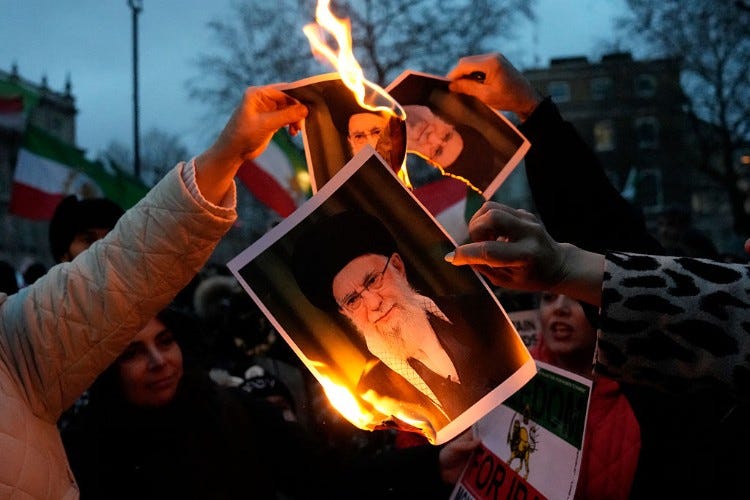
I’m aware that the definition of “sovereignty” is not a hot-button political issue; if “definition of sovereignty” made it into a poll of voters’ priorities, it would probably rank in the mid-20,000s, in between “fire hydrants are too sexy” and “Fruit by the Foot should be metric”. But sovereignty has been on my mind as the Iranian people seek to topple their regime and many Venezuelans celebrate the sorta-toppling of theirs. Sovereignty is the linchpin of the modern international system, but…is sovereignty good? The more I think about the concept, the more muddled it becomes. So, please indulge my confusion™.
Sovereignty became a key concept in international relations in the 17th century, when some Europeans decided that it would be wise to stop slaughtering each other over whether the Lord’s Prayer should say “forgive us our debts” (Protestant) or “forgive us our tresspasses” (Catholic). After the Thirty Years War, it was decided that sovereignty — the idea that each state should control its own affairs and be free from outside interference — would be fundamental to the European system. So: You want to be Catholic? Fine. Protestant? That’s allowed. Dutch? God, you’re really pushing it, but…okay. Sovereignty was a major reason why Europe moved out of the backwards era of massacring each other over religion and into the enlightened age of massacring each other over resources.
