


For as much as I chide Bluesky for being a greenhouse for every bad lefty idea that sustains the MAGA beast, I understand why it became A Thing. A crazy billionaire bought Twitter and used it to stump for an authoritarian loon. He made tweaks that made the platform less fun, unless you enjoy sports betting ads and hot takes about the origins of World War II. As much as tales of billionaire influence are often overblown, in this case, the story was true: An ultra-rich guy seized a media platform and used it to promote his Ayn-Rand-and-ketamine-influenced views.
So, progressives bolted. They packed up their NPR tote bags and RBG workout tapes and fled to Bluesky. This exodus was more than a fit of pique; it was a concerted attempt to build a Twitter alternative. And right after the election, it looked like it might work:
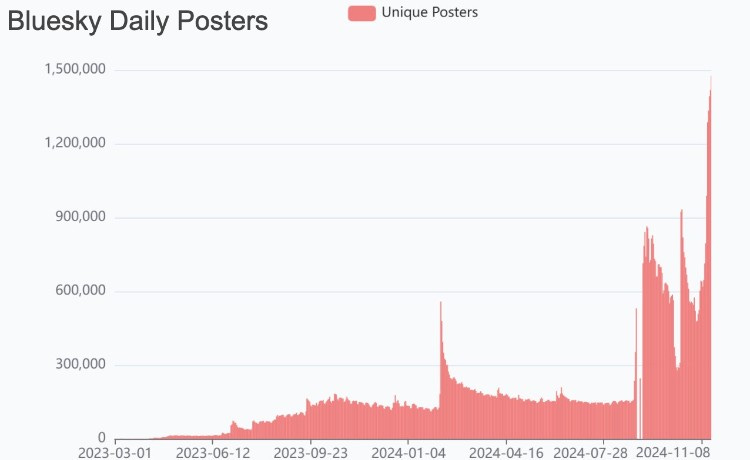
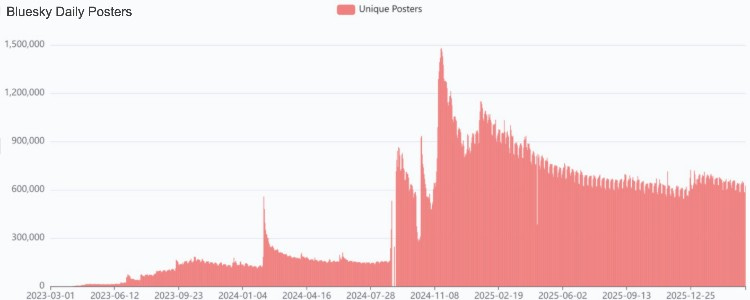
That spike led to a flurry of “Could Bluesky Replace Twitter?” articles. It wasn’t the world’s craziest theory; MySpace, Vine, and Clubhouse prove that it’s possible for Platform A to be replaced by Platform B (especially if Platform B explores bold new horizons of porn). But in the last 18 months, Bluesky has slowly bled out:
Meanwhile, back on Twitter, conservative voices are dominating the conversation, as shown by this bubble chart compiled by Nate Silver:
